
Adaptive Consistency: What Real Progress Looks Like in Recovery
Consistency isn’t sameness. It’s fidelity to your "why" under changing constraints.

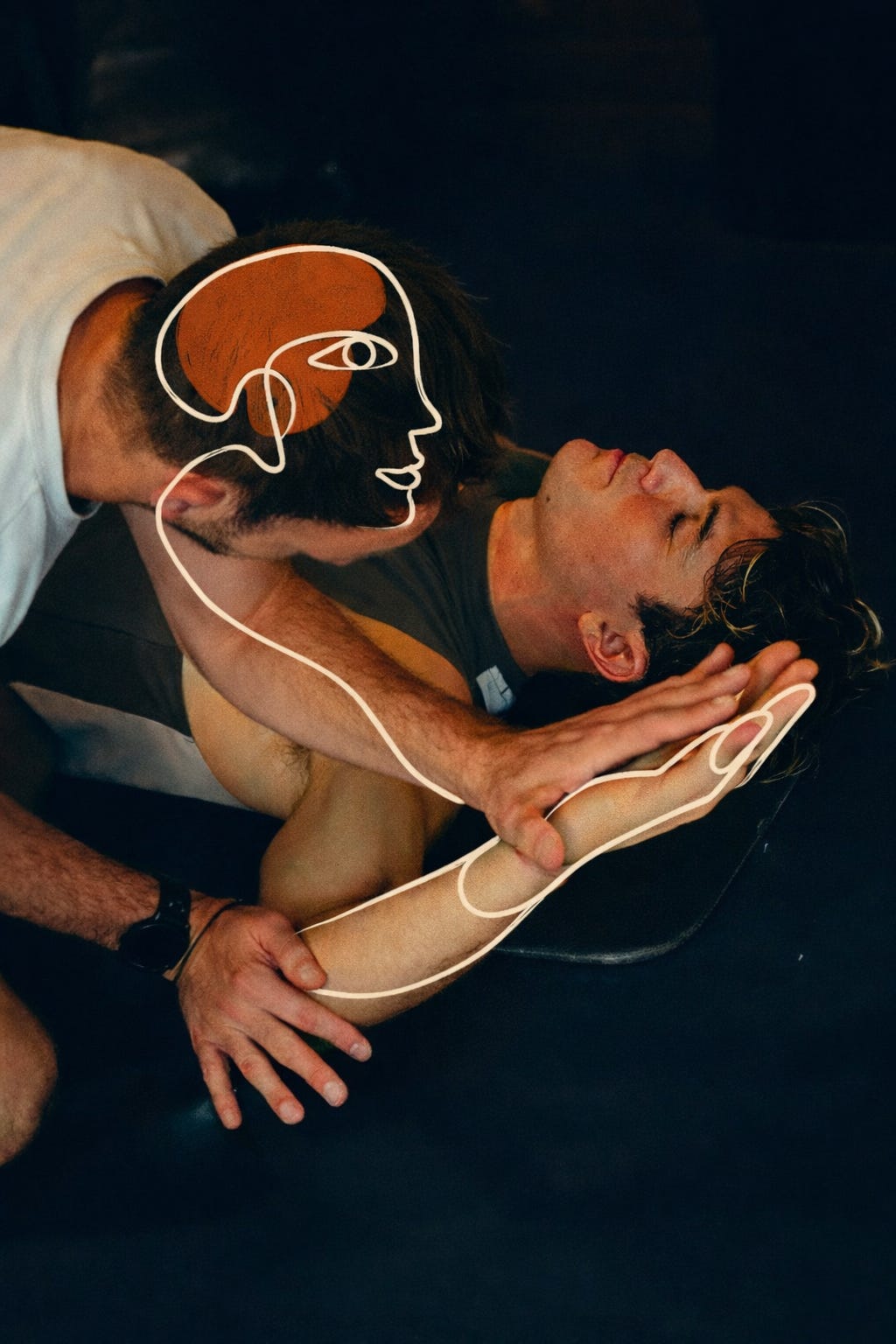
Recovery and hormones don’t care about your color-coded routine. Bodies fluctuate by hour and by season, and the old “just be consistent” advice often becomes self-gaslighting: push harder, ignore the signals, pretend nothing changed. I call the alternative Adaptive Consistency—a skill of staying true to your why while flexing the how to match today’s reality. On HRT and LDN, post-IUD, while repairing from RED-S and an autoimmune wobble, I’ve had to learn this the slow and organic way. In this piece I map the tension between “insanity is doing the same thing” and “a journey is a thousand steps,” and offer a simple practice to keep taking the next true step—no checklist required.
It's been about eight months since I'd gotten my autoimmune disease diagnosis and immediately altered my diet, supplement stack, mental and physical exercises to give myself the best possible chance at recovery. It's been a little over three months since I moved from London to the Bay Area. It's been over two months since I removed my birth control. And it's been 3 weeks since I started hormone replacement therapy (HRT) and LDN.
Safe to say, this year has held a lot of change. But it's also required a whole helluva lot of consistency. When you're on the road to recovery there's no shortage of people who will happily share their advice or opinions on what you should do to get better. Naturally, a lot of it is contradictory. And that alone can feel overwhelming, pathologizing or paralyzing.
But I do think there is something very simple we can do to help ourselves continuously move in a healthier direction.
A riddle to open the door
When is doing the same thing every day sanity, and when is it insanity?
Answer: It’s sanity when your context is stable and your why is alive. It’s insanity when your context has changed and you refuse to let your methods change with it.
Most of us live suspended between two truths:
“Doing the same thing and expecting different results is insanity.”
“A journey is made of a thousand steps.”
Both are right; they just speak to different problems. The first warns against clinging to methods that no longer fit reality. The second reminds you that meaningful change accumulates through small repetitions. Adaptive Consistency is the bridge: you keep stepping, but you change how you step when the terrain changes.
Start where the steps begin: your why
Our bodies change constantly— whether we’re healthy or healing. Consider the hormonal and neurochemical fluctuations that happen, some in a matter of seconds, hundreds if not thousands of times throughout the day. If we can bank on the body constantly changing, then shouldn’t we appreciate the fact that we might be dealing with fluctuating conditions? And when you’re working with a body that’s trying to find its footing health-wise, those fluctuations require even more attention.
Those in the tech or manufacturing space might be familiar with something called The 5 Whys. Having worked in tech myself for around a decade, I've used and taught this exercise countless times. I never thought I'd use it in a health context, but here we are.
The 5 Whys is a simple Toyota-born, root-cause method: ask “why?” repeatedly—usually 3–5 times—until you hit an actionable cause or motive.
The first "why" is almost always a mascot—cute, inspiring, not the actual driver. When doing this personally, you might find that around "why" three or four, the mask slips and you're confronted with: fear, anxiety, ego, shame; or purpose, contribution, freedom, love. That’s the engine.
Take this example:
I want to train four days a week. → Why?
To get leaner. → Why?
So I feel like myself again. → Why?
Because I equate being strong with being safe. → Why?
Because I spent years feeling unsafe in my body.
Now decisions aren’t about reps or macros; they’re about safety. On days your system is inflamed, puffy, flat, or fragile, the most consistent thing might be choosing a plan that protects safety and preserves identity—e.g., swapping going to the gym for stretching, or a walk + breath + upper-body technique work.
Same why, different how. That’s consistency.
Two ways we self-sabotage
Hammer Time: Push the same plan no matter what. It feels virtuous and looks like discipline, but it burns goodwill with your nervous and endocrine systems. You “win” the day and lose the week.
The Carousel: Constantly change the plan, declare “nothing works,” hop to the next supplement/protocol after seven days. You “keep things fresh” and never give biology time to adapt.
Adaptive Consistency refuses both. It says: I will do what honors my "why" today—and I’ll still be here doing it next week. This is what sustainable progress looks like. This is what true healing looks like.
Listening is not passivity
With all of the change my system has gone through this year, I'm reminded that my body is doing all that it can to metabolize it in a manner that moves me forward. Some days my mind is clear and my motivation is present. Other days my legs look like that of an elephant, my brain feels like it's sitting in formaldehyde somewhere on the sidelines, and my mood hums one octave lower.
Old me would've attempted to “prove” commitment by forcing the same training session, diet and plan while shaming the afternoon mirror.
New me asks: What action keeps me faithful to my why and my physiology today?
That question changes the scoreboard. Instead of grading the day by physical appearance, professional wins or a perfect macro split, I now grade it by fidelity:
Did I protect the signal (sleep, breath, pacing) that lets tomorrow exist?
Did I choose the version of training/nutrition/work that my nervous system can actually consolidate?
Did I avoid false heroics—moves that look impressive but cost me three days?
None of that is quitting. It’s programming.
The smallest “exercise” I’ll ever suggest
Not a checklist—just a lens. Take one minute (a simple note on your phone; no ritual, no journaling points).
The Why Lens
What did I do today that served my why? Name one thing-- and honor the intent.
What did I do today that served fear, anxiety, ego, or shame? No flogging, just awareness.
What is one next true step that serves my why with today’s constraints? Make it so small it’s boring.
That’s it. If you want a little more, run a quick Why Ladder when you’re stuck: ask “why” about a decision three times (or more). Stop when you feel the gear shift from surface to core. Decide from there.
Progress without self-gaslighting
“Consistency” gets weaponized when we assume a body operating under consistent conditions. But bodies aren’t constants; they’re living control systems. They upregulate, downregulate, retain water, reroute energy, and renegotiate priorities—especially during hormonal shifts and recovery. They are a true wonder of nature. Adaptive survival systems. Calling fluctuation “failure” is like calling tides undisciplined.
Here’s the move, instead: define consistency as reliable identity expression.
On high-capacity days, that expression might look like loaded training, deep work, a social yes. On low-capacity days, it might look like walks, protein, breath, and a no.
Both demonstrate consistency if both express the same why.
How practitioners can hold this (lightly)
If you work in functional or somatic care, offer your patients permissioned flexibility without handing them a 14-point protocol. Simple language helps:
“We’re not lowering your standards; we’re matching dosage to today’s capacity so your body can say yes again later.”
“Your identity is the constant. The expression flexes.”
“If you can’t do the how we planned, pick the how that protects the why. Then stop there. That’s a win.”
The paradox: patients who are trusted to adapt based on clarity over what they're actually feeling and experiencing, stop catastrophizing adaptation. Adherence improves because shame leaves the chat.
My current reality (and what’s working)
I’m still recomposing. And I'm still fighting the performative nature that's so pervasive in today's world. We feel the need to constantly show 'progress' in a form that looks impressive because we think everyone is watching or everyone else is doing better. Truth is-- mirrors have only been around for 8000 years and social media has only been around for about 20-30 years. Our measuring sticks have become skewed and don't represent the complex communication systems of our bodies that have evolved over millions of years. Here’s what's keeping me sane:
I commit to one true step that protects tomorrow’s capacity (sleep window, breath, protein).
I treat visible afternoon puffiness as in-progress hydraulics, not failure.
I plan my “heavy lifts” (literal and cognitive) for the windows my body repeatedly tolerates.
On gray-brain days, I trade heroics for fidelity. If I can’t do the plan, I choose the version that keeps my why intact.
There’s no applause for this. Just steadiness. And steadiness compounds.
Closing: the quiet courage of staying
If I had to summarize Adaptive Consistency in one sentence, it would be this: Keep your promises to your deepest reason, and let everything else be negotiable. Most of us don’t need another spreadsheet; we need the courage to stay with a body that’s changing while we keep moving toward a life we actually want.
The riddle wasn’t a trick. Sanity is letting your methods change when your reality changes, so the thing that doesn’t change is you.
ANEW: Your Decision-Making Companion
ANEW is the platform I’m building to help you deepen everything you’ve just read. Think of it as your emotionally intelligent co-pilot—an AI-powered guide designed to help you access, interpret, and refine your internal signal with clarity and compassion.
ANEW is a Biobehavioral Guide to your wellness ecosystem. We believe that how you feel is one of the most useful signals of well-being, and that wellness is an ecosystem where biology, beliefs, and behavior interact.
Knowing how you feel—and how to respond—is a learnable skill. ANEW helps you notice patterns, make sense of your feelings, and try small, non-medical practices to support feeling more balanced in daily life.
Our app is currently in testing with a pilot group of users and will be rolled out to our waiting list soon 👉🏼